Cardarrow_outward
Psychological Instability, Camera Technique
The core reason Psycho has been celebrated as a masterpiece that transcends simple horror is that it succeeded in rendering the psychological instability of the source novel's characters not through words but through visual language and atmosphere. In particular, its direction maximizing the horror in the space that should feel safest remains a textbook example of the thriller genre — conveying not the shock of events but the pressure of psychological tension.
Characterarrow_outward
Sam Loomis (Sam Loomis)
Sam Loomis is Marion Crane's lover and the key pursuer tasked with uncovering the truth. He is simultaneously the person who triggered Marion's flight at the story's outset and the one who, as an external gaze, probes the eerie atmosphere of the motel and the secrets Norman Bates is hiding. Loomis represents the audience's own perspective, and through his logical, dogged investigation, serves as the device through which the film demonstrates how horror is maximized in what should be the safest of spaces.
Characterarrow_outward
Lila Crane (Lila Crane)
Lila Crane throws herself into the case to find her missing sister Marion and recover the stolen $40,000. In the process of uncovering the truth she comes closer than anyone to the shocking secret Norman Bates has been hiding, serving as the central pursuer who unravels the threads of horror alongside the audience.
Cardarrow_outward
The Shower Murder Scene: Horror Maximized
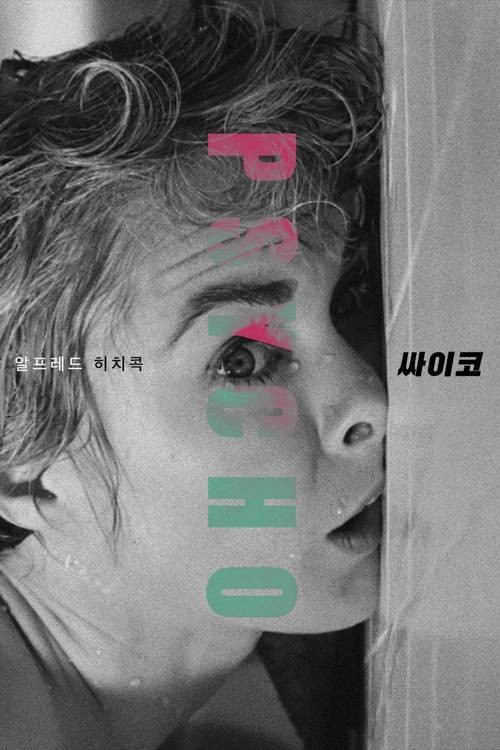
Counted among the most legendary set pieces in film history, the shower murder scene is the directorial apex of transforming a bathroom — the most private and supposedly safe space — into a stage for horror. Going beyond a mere depiction of events, the scene is a technical achievement that shatters the audience's psychological safe zone and maximizes the emotion of horror itself.
Characterarrow_outward
Norman Bates (Norman Bates)
Norman Bates hides behind the disguise of a gentle, kind motel owner, but in reality he is a man of split personality dominated by his mother's psyche. His existence, going beyond simple horror, is the zenith of the psychological thriller — showing how the human mind can collapse and warp even in the place that should feel safest.
Readingarrow_outward
Repressed Desire and Duality (Split Personality)
The core theme of Psycho is a deep interpretation of the desire of the archetypal figure of 'the mother' projected onto Norman Bates's split personality, and of the suppressed jealousy that results. Norman's actions go beyond a mere pathological mental state — they are a manifestation of a compulsive desire to maintain the 'family' system that has sustained him and the secrets within it — a psychological tragedy showing how fragile individual identity can be when formed under the weight of external gazes and relationships.
Characterarrow_outward
Marion Crane (Marion Crane)
Marion Crane is the very catalyst of the film's suspense — the 'inciting incident' incarnate. Her unstable psychology, driven to steal $40,000 and flee, leads her to experience extreme terror in the very places that should feel safest: the motel room and the shower. Her sudden death is not merely a tragedy; it is the flashpoint of a grand pursuit to unravel Norman Bates's hidden duality and the family's secret.
Cardarrow_outward
Box Office Triumph and Artistic Recognition in Tandem
Psycho is a masterpiece that, despite being dismissed as a 'cheap exploitation horror film' on its release, has seen its technical craft and psychological depth reassessed with the passage of time. Going beyond simple horror, it has established itself — through camera technique and sound design alone, exploring the darkest recesses of the human psyche — as the defining textbook of the thriller genre.
Cardarrow_outward
Bernard Herrmann's Score: The Power of Soundtrack
Bernard Herrmann's score is the decisive element that elevates the horror in Psycho from mere visual shock to aural suspense. His sharp, dissonant music for strings alone maximizes the viewer's psychological anxiety, providing the artistic foundation that earned the film its reputation as the textbook of the horror genre.
Readingarrow_outward
The Space of Horror and the Psychological Safe Zone
Psycho relentlessly subverts for the audience the very concept of the safest spaces — the private realm and the psychological refuge. Through the process of turning a motel and above all a bathroom — the most private place of all — into a stage for violence, the film delivers in maximized form the truth that horror does not arise from external monsters or events, but from human psychological vulnerability and the sense of betrayal. This is the textbook interpretation of a thriller.