The Killer's Disguise: Fingerprints and Photographs
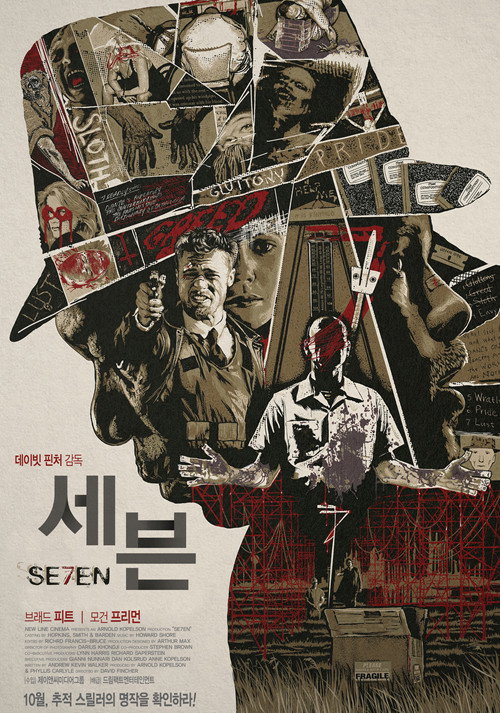
The fingerprints, photographs, and murder journals left by Se7en's killer are not mere traces of crime but a meticulously designed theatrical stage aimed at investigators. The killer uses victims' fingerprints to stage crime scenes and creates an 'orchestration' that subtly deceives the police. This process shows that the killer has an intelligent plan to go beyond mere killing to deliver a grand message about 'justice' and 'truth.'
The Killer's Staging: The Labyrinth Disguised as Evidence
Se7en's killer is not a simple murderer. He is closer to a perfect director and author of a psychological drama who reads the minds of investigators. Every clue he leaves — fingerprints, photographs, murder journals — is not pointing to truth, but 'bait' designed to lead investigators to think only in a specific direction.
1. The Planting Point: The Perfectly Manipulated Scene
The way the killer stages the scene takes the form of 'physical evidence' — what investigators trust most. This simultaneously stimulates investigators' intuition and logical thinking, leading them to fall into the trap themselves.
- Fingerprint Deception: The killer uses victims' fingerprints to stage the murder scene, or leaves fingerprints to make it appear as if he himself is the culprit. This makes investigators certain that 'someone was at this scene.' But these fingerprints are often not real evidence, but merely devices for the next stage.
- Murder Journals and Photographs: The vast murder journals and photographs the killer leaves display the scale and complexity of the case. The photographs in particular hint at the next target — a core psychological pressure device making investigators predict the direction of the next crime.
- Message-ified Clues: Phrases like 'Long is the way and hard, that out of Hell leads up to light' are not simple warnings, but 'declarations' forcing the killer's own philosophical worldview on investigators.
2. The Recovery Point: Loopholes in Evidence and the Discovery of Truth
The moment investigators realize the killer's staging is when they take comfort in too-perfect evidence. In this film, truth is found in 'deficiency.'
- The Paradox of Fingerprint Analysis: Investigators believe they have succeeded in fingerprint analysis, but in reality those fingerprints are 'fake evidence' intentionally left by the killer. The killer mocks the very concept of 'objective evidence' that investigators most rely on.
- The Discovery of 'HELP ME': The phrase 'HELP ME' found behind the frame at the lawyer's wife's house shows that when investigators have dug too deeply looking for evidence, the most simple and human cry of distress can become the biggest clue.
- The Decisive Realization: The moment investigators realize that all the clues left by the killer are ultimately a 'fabricated narrative,' they realize that what they have been pursuing is not the truth of the crime, but the grand 'show' the killer has set up.
3. The Foreshadowing List: The Killer's Meticulous Design
The killer's staging works as multiple layers of foreshadowing throughout the film.
- The Gaze of the Photographs: The photographs the killer leaves do not merely record events, but contain a gaze as if previewing 'the next scene' toward the audience. This forces investigators to predict: 'Next will be this.'
- The Order of the Sins: The order of murders according to the Seven Deadly Sins is a structural foreshadowing that shows the process of psychological regression of humanity. Each sin symbolizes the darkest psychological point humanity can reach.
- The Completion of Fingerprint Manipulation: The fact that the killer cut off all ten fingers' fingerprints is the most powerful foreshadowing showing the ultimate intention to neutralize the very 'fingerprints' that investigators most depend on.
Why the Killer's Staging is Core to the Work's Identity
The core of this film is not the 'killer' but the abstract concept of 'justice.' The killer's staging is the most powerful visual answer to the most important question this film poses: 'What is justice?'
The killer mocks all the systems investigators trust and rely on — law, science, evidence. He leads investigators to be captivated by the illusion of 'objective truth,' and ultimately argues that truth lies not in physical evidence, but in humanity's 'essential emotions' and 'moral judgment.'
These staging devices play a decisive role in placing the film not merely as a crime thriller but on the level of a philosophical thriller. Audiences become immersed in the process of catching the killer, yet simultaneously ask themselves: 'If I were the investigator, how would I interpret this evidence?'
Why It Matters
The killer's meticulous staging is the visual realization of Se7en's most important theme — 'the relativity of truth.' The film shows how easily 'evidence' can be manipulated and misused, arguing that legal justice cannot rely on scientific facts alone. The killer tests investigators' intellectual abilities while simultaneously collapsing their 'belief in the system.' The film thereby establishes itself as a work posing fundamental questions about the modern societal method of delivering justice — going beyond a mere mystery.
Other 명장면 dives4
- arrow_outward
Hard-Boiled Aesthetics and Gloomy Visuals
The core identity of Se7en is formed not merely by plot but by the overwhelming visuals of a drab gray cityscape in perpetual rain. This gloomy, oppressive color palette maximizes the hard-boiled crime thriller atmosphere and serves to visually project the moral decay and dark desires inherent in humanity that the characters face.
- arrow_outward
Somerset's Cynicism and Mills's Passion
Somerset's cold principled approach and Mills's passionate intuitionism represent more than mere detective contrast — they pose the fundamental philosophical question of 'the method of realizing justice.' The collision of these two detectives dramatically illustrates the gap between rational justice operating within the bounds of law and instinctive justice that explodes through emotional rage, forming the core narrative axis of the film.
- arrow_outward
The Seven Deadly Sins Serial Murder Structure
The Seven Deadly Sins serial murder structure — the core structure of Se7en — is not merely a crime plot but like a vast 'sermon' symbolizing humanity's fundamental guilt and moral collapse. The way the killer commits murders themed around each sin structures humanity's dark desires and guilt that law and justice cannot capture, posing philosophical questions to the audience.
Back to the title
Se7en
13 deep dives in total