The Seven Deadly Sins Serial Murder Structure
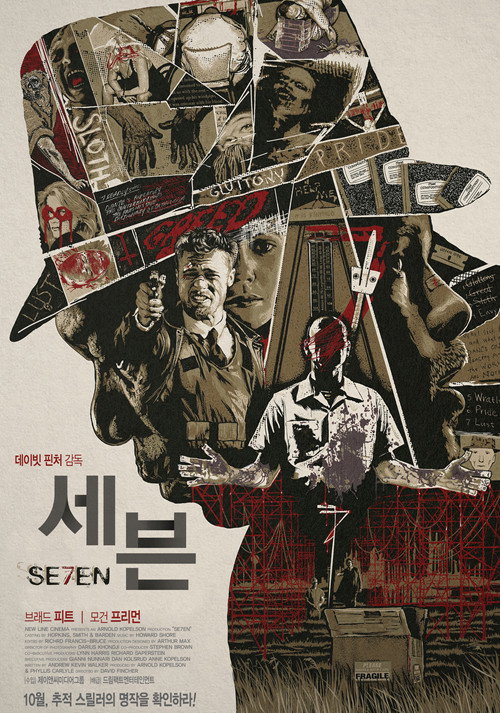
The Seven Deadly Sins serial murder structure — the core structure of Se7en — is not merely a crime plot but like a vast 'sermon' symbolizing humanity's fundamental guilt and moral collapse. The way the killer commits murders themed around each sin structures humanity's dark desires and guilt that law and justice cannot capture, posing philosophical questions to the audience.
The Seven Deadly Sins: The Killer's 'Sermon' Toward Justice
The serial murder case in Se7en has the Christian concept of the Seven Deadly Sins as the backbone of its plot. This shows that the killer is not a simple murderer, but an intelligent designer who structures humanity's most fundamental guilt and forces a kind of 'judgment' on the audience. The temporal structure of events unfolding from Monday through Sunday is like a vast 'sermon' showing the gradual deepening of guilt.
1. The Gradual Intensification and Symbolism of the Sins
Each sin inflicts a specific form of suffering on the victim, and the method itself maximizes the essence of the sin. In this process, the clues the killer leaves are meticulous devices designed to lead victims to confront their own guilt.
- Gluttony: Monday's event heralds the beginning of guilt through the physical pain of excessive consumption. The killer inflicts pain by forcing the victim to eat until their stomach bursts.
- Greed: Tuesday's event borrows tragic motifs from Greco-Roman tradition. Forcing the victim to cut their own flesh conveys the message that material possessiveness and excessive desire ultimately lead to self-destruction. The inspiration from Shakespeare's The Merchant of Venice hints that this sin is a question of 'possession and value' beyond simple greed.
- Sloth: Thursday's event shows the most brutal 'sin of time.' The process of binding a victim for a year and watching them slowly wither symbolizes the end of helplessness and a neglected life.
- Lust: Saturday's event combines sexual violence with compulsion. It nakedly exposes the pitiful state of humanity that occurs when pure desire combines with violence.
- Pride: Sunday's event is a question of ego and choice. Forcing the victim to choose 'whether to survive or commit suicide' forces the ultimate responsibility humans must take for their own existence and destiny.
2. The Seven Deadly Sins as a Structural Device
The most important point of this structure is that the killer not only murders, but leaves clues as if imparting a lesson. The word 'Gluttony' Somerset finds at the scene, or the note 'Long is the way and hard, that out of Hell leads up to light,' definitively establishes that all these murders are not random but a continuous 'message' meticulously calculated.
The killer tries to prove through the structure of the Seven Deadly Sins that 'guilt' within humanity — as an inner existence — is a far more powerful and destructive force than the 'killer' tracked by law and police. The remaining two sins revealed at the end symbolize the total sum of all this guilt and the darkest abyss humanity can reach, completing the shocking ending of the film.
Why It Matters
The Seven Deadly Sins serial murder structure is the core axis defining Se7en's work identity. This structure elevates the film from a mere hard-boiled crime thriller to a philosophical thriller posing human existential questions. The list of sins presented by the killer confronts audiences with the question 'What is justice?' While the police pursue 'external justice' of law and evidence, the killer exposes 'internal guilt' of humanity. The sight of Somerset and Mills conflicting within this structure maximizes the film's fundamental pessimism — that no matter how meticulous legal justice is, it can be rendered helpless before humanity's primal guilt. Without this structure, Se7en would have been nothing more than a mere enumeration of brutal murder cases.
Other 설정 dives4
- arrow_outward
The Killer's Disguise: Fingerprints and Photographs
The fingerprints, photographs, and murder journals left by Se7en's killer are not mere traces of crime but a meticulously designed theatrical stage aimed at investigators. The killer uses victims' fingerprints to stage crime scenes and creates an 'orchestration' that subtly deceives the police. This process shows that the killer has an intelligent plan to go beyond mere killing to deliver a grand message about 'justice' and 'truth.'
- arrow_outward
Hard-Boiled Aesthetics and Gloomy Visuals
The core identity of Se7en is formed not merely by plot but by the overwhelming visuals of a drab gray cityscape in perpetual rain. This gloomy, oppressive color palette maximizes the hard-boiled crime thriller atmosphere and serves to visually project the moral decay and dark desires inherent in humanity that the characters face.
- arrow_outward
Somerset's Cynicism and Mills's Passion
Somerset's cold principled approach and Mills's passionate intuitionism represent more than mere detective contrast — they pose the fundamental philosophical question of 'the method of realizing justice.' The collision of these two detectives dramatically illustrates the gap between rational justice operating within the bounds of law and instinctive justice that explodes through emotional rage, forming the core narrative axis of the film.
Back to the title
Se7en
13 deep dives in total