Cardarrow_outward
Psychodrama as Therapy
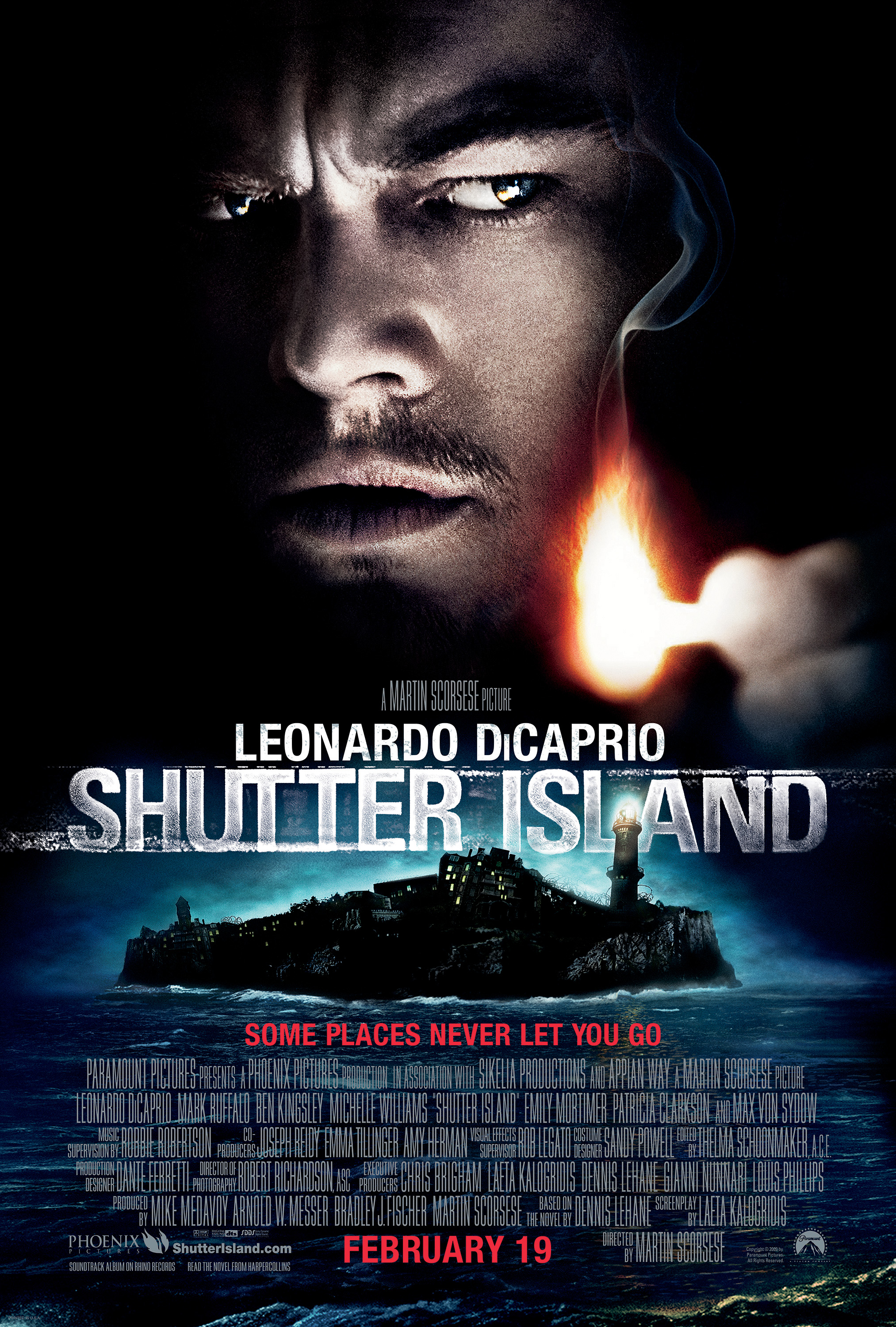
The gun and the match in *Shutter Island* are core devices symbolizing protagonist Teddy Daniels's unstable psychology and guilt. The act of borrowing a match to light a cigarette reflects his psychological state of dependence on others, always seeking 'permission' for his own actions; the gun functions as an instrument of 'punishment' he inflicts on himself, and as the ritual of a psychological salvation to end his guilt. These two symbols ceaselessly shake the boundary between the truth Teddy pursues and the hallucination he has created.
Characterarrow_outward
Edward Daniels (Edward "Teddy" Daniels)
Edward 'Teddy' Daniels is not a simple investigator but an 'unreliable narrator' onto whom his repressed guilt and trauma have been projected. As he pursues the missing-persons case, he comes to realize that everything he has experienced is an enormous psychological theater — and through the process in which the boundary between truth and delusion, reality and hallucination, collapses, he poses to the audience a fundamental question about the very definition of 'truth.'
Characterarrow_outward
Chuck Aule
Chuck Aule appears as Edward Daniels's closest ally and partner, yet in reality he is the therapist most closely observing and guiding Teddy's psychological breakdown. His ever-smiling demeanor and subtle powers of observation are the device that ceaselessly raises questions about where the boundary of 'truth' lies, maximizing the ambiguity of hallucination versus reality at the film's core.
Characterarrow_outward
Dolores Chanal
As the hospital director of Ashecliffe, John Cawley controls the 'truth' under the guise of 'therapy.' He opposes inhumane treatments like lobotomy, yet ultimately designs and executes an elaborate 'psychodrama' to manage Teddy Daniels's violent tendencies. Cawley is not merely an administrator but a narrative device that poses to both the audience and Teddy the question of where the boundary of 'truth' lies.
Characterarrow_outward
Rachel Solando
Rachel Solando — the 'missing patient' who sets the entire story in motion — is the essential medium symbolizing protagonist Teddy Daniels's guilt and fabricated memories. Her disappearance is not merely a plot device for a detective story; it is a vast psychological apparatus that projects onto the audience the past trauma and guilt Teddy has been suppressing and evading.
Characterarrow_outward
John Cawley
As director of Ashecliffe Hospital on Shutter Island, John Cawley is not merely a medical professional but the core power figure who manages the entire order and 'truth' of the institution. The 'psychodrama' therapy he devises and executes is a vast theatrical device designed to control patients and preserve the hospital's secrets. He appears to reveal the truth to protagonist Teddy Daniels, yet in reality functions as the architect drawing Teddy ever deeper into the hospital's logic.
Quotearrow_outward
Quote
"Is it better to live as a monster, or to die as a good man?" is a line that condenses the film's core philosophical question. The question symbolizes the fundamental dilemma of human existence that protagonist Teddy Daniels faces when confronted with his guilt and the truth of reality. It does not merely ask about criminality but asks whether a person has the courage to acknowledge his own dark nature and live with it — or whether he will abandon existence itself to avoid that pain.
Readingarrow_outward
The Projection of Guilt and Theatrical Truth
The central theme of Shutter Island is an exploration of the inner world of a human being trapped in the psychological prison of absent 'truth' and 'guilt.' The film shows that the missing-persons case protagonist Teddy Daniels is investigating is not an external crime but a vast delusion he has created by projecting his unbearable past trauma and guilt outward. The film asks the audience whether everything we call 'objective truth' may in fact be the most powerful and dangerous form of self-deception.
Readingarrow_outward
The Boundary Between Sanity and Insanity
The central theme of Shutter Island is 'the dissolution and reconstruction of identity.' Protagonist Teddy Daniels plays layered roles — the criminal he pursues, the victim, and the investigator — and ultimately realizes that every trauma and incident he experiences is not an external truth but a vast hallucination (psychodrama) of his own making. The film argues that the human self is not a fixed entity but something perpetually reconstructed in fluid motion through memory, guilt, and narrative staging.
Cardarrow_outward
Names Linked by Anagram
The anagram structure of names — one of the key devices in *Shutter Island* — goes beyond mere coincidence and symbolizes that every truth Teddy Daniels pursues is not an external event but a projection of the guilt buried deep inside himself. The structural similarity of the names of major characters — Edward Daniels, Rachel Solando, Dolores Chanal — hints that every trauma and investigation Teddy experiences is ultimately a question directed at himself and his past.
Cardarrow_outward
The Dual Function of Shutter Island
Ashecliffe Hospital on Shutter Island is not merely a remote island but an enormous stage where physical confinement and psychological control are combined. It confines inmates under the guise of 'treatment' while simultaneously serving as the psychological prison onto which protagonist Teddy Daniels projects his guilt and trauma. Its closed nature ceaselessly asks the audience how ambiguous the boundary between truth and hallucination can be.
Cardarrow_outward
The Symbolic Contrast of Water and Fire
The helpless and awkward attitude of the search team is one of the most important meta-devices in *Shutter Island*. This scene covertly conveys to the audience that the 'investigation' protagonist Teddy Daniels believes in is already a fabricated and staged theater. This foreshadowing — that every procedure in the investigation is fiction — plays a decisive role in maximizing the film's central theme of 'the subjectivity of truth.'
Cardarrow_outward
Teddy's Illogical Investigation
Edward Daniels's pattern of illogical thinking is a core device of the film. When explaining the motivation for the case, he starts from a 'missing person' and moves — without logical connection — through 'tracking a criminal' to 'World War II war crimes' and 'Communist conspiracies.' This exaggerated, incoherent narrative gives the impression of a schizophrenic patient who has lost the ability to perceive reality objectively, prompting the audience to question fundamentally every 'truth' he states.