The core theme of this film is not the denial of Jesus, but 'how a myth gets made.'
John himself, in opposition to Roman cruelty, had only wanted to spread Buddhist teachings, but after he disappeared the story was exaggerated and built upon until it had become Jesus Christ — an allegory of the mechanism by which one ordinary human being's teaching, through the sedimentation of time, condenses into a sacred myth. Without denying the value of belief, the film says that belief too is just part of being human, and is, in the end, of humans and for humans.
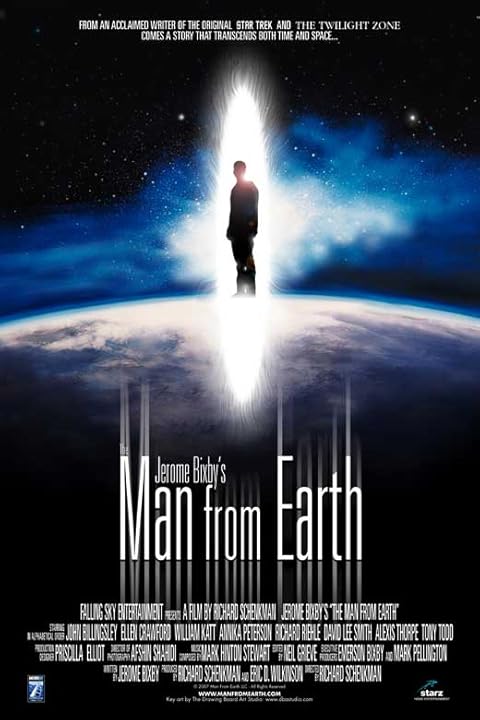
The title 'The Man from Earth' is a de-mythologizing declaration that god/Jesus is not extraterrestrial or celestial but 'someone from Earth.'
The film's title 'Man from Earth' says that the protagonist too is, in the end, a human being who began from the Earth (Earth) or from the earth (earth) — that gods and Jesus are not extraterrestrial or celestial beings but ones that began on Earth, from Earth. Since at the end it is proven that he has not aged for at least fifty years, there is little room to read it as pure fabrication.
The essence of immortality is not power but solitude.
When one hears '14,000 years of life,' one tends to imagine wealth, antiquities, omniscience — but John has no rare objects, no expensive furniture. In a life where the meaning of a starting point has blurred, objects are things that will eventually vanish, and have no meaning. The closing scene in which Sandy leaves with him is not simple romance but the moment the 'complete solitude' he has carried for 14,000 years is dissolved — for the first time, he has met a partner who, knowing what he is, has chosen to stay beside him.
There is a suggestion that Sandy may be the same-kind John met in 1600.
Sandy alone among the colleagues, when the others press and contradict John, accepts him fully, and the camera often holds her in solo shots. She does not treat John's story as something to be 'proven' but accepts it as his 'life,' and rather than asking questions she watches his emotions and tries to protect him — at the very least, the one character with the empathic capacity to understand his solitude and his time. ⟦OUTSIDE: This reading is strongly argued in the ending-interpretation of the YouTube channel 'Dokdok-i,' and is not the canonical reading.⟧
ⓘ Includes some external sources
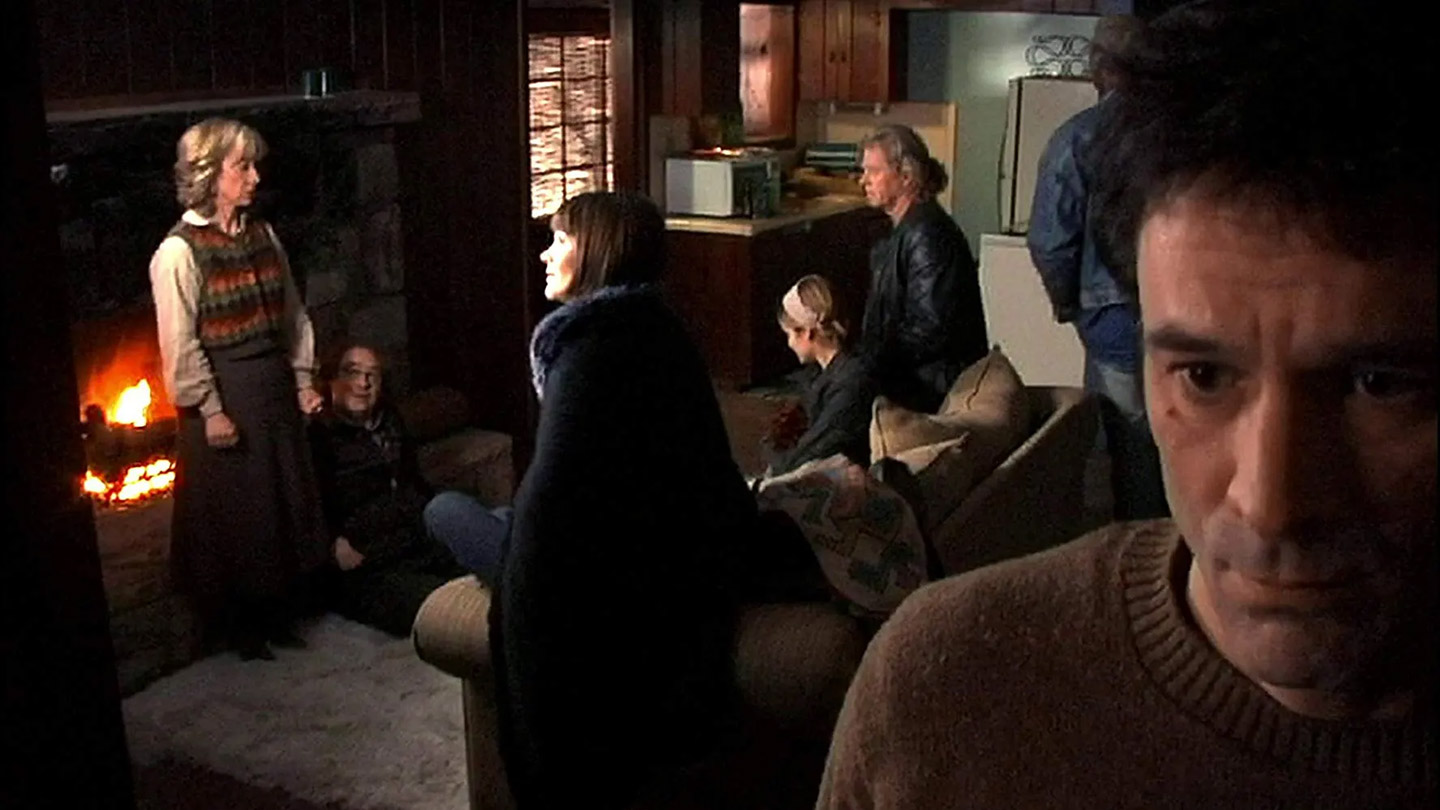
John's statements are logical, but to Edith they arrive as a violence that denies the meaning of her life.
The people who prided themselves on being intellectuals, on realizing that John's story has no logical defect, gradually slip into confusion — the primal fear a human being feels when the common sense and beliefs they have built over a lifetime are denied. John's words are logical, but to Edith they land as violence that denies the meaning of her life, and so she responds not in anger but in 'tears.'