The Ghost Town of Specter and the Witch
The ghost town of Specter and the witch Jenny are not mere fantastical backdrops — they are narrative devices through which Ed Bloom reconstructs his life as a ‘story.’ These spaces transcend the logic of reality, posing for the audience and son Will the fundamental questions of what ‘truth’ is, and whether what sustains a human life is objective fact or the power of beautiful fiction.
Specter and Witch Jenny: Where Reality and Narrative Dissolve
Specter and Jenny the witch in Ed Bloom’s adventure tales are the film’s most captivating fantastical elements. They function not merely as a backdrop for ‘incredible adventure’ but as essential ‘narrative devices’ for the father to complete his life as one grand story and pass it on to his son.
1. Specter: A ‘Space Within Story’ Where Time and Reality Stand Still
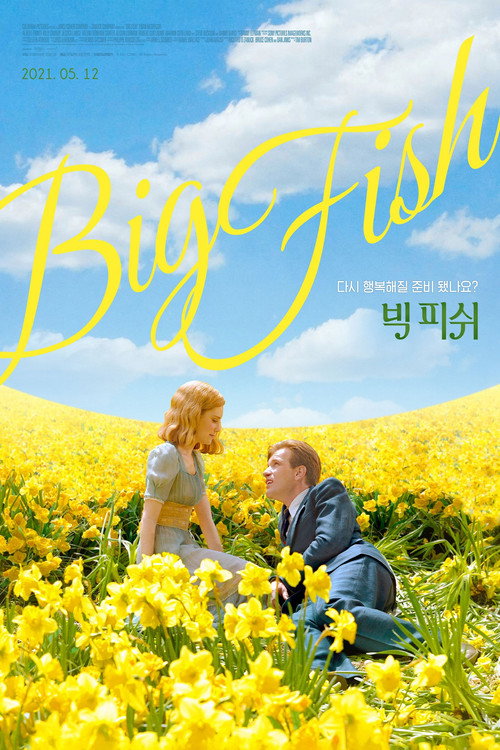
Specter does not exist as a geographical location. It is a legendary space that exists only by the power of ‘story’ — where the flow of time is non-linear and the logic of reality does not apply. The father’s arrival in this town symbolizes the psychological process of redefining his life as he faces the physical limits of reality and death.
- Distortion of time: Specter gives a feeling of ‘time having stopped,’ which connects to the father’s desire to catch one moment of his life and perpetuate it forever. Through this space, the father re-enacts his most brilliant moments and tries to preserve them eternally.
- The suspension of truth: Everything that exists in this space exists only in the form of ‘legend’ rather than ‘truth.’ This is the fundamental wall Will Bloom hits every time he tries to excavate his father’s stories — a device that endlessly poses the question to the audience too: ‘Could this have been real?’
2. Witch Jenny: A Prophetic Guide and Narrative Catalyst
Jenny holds the title of ‘witch who sees destiny,’ but her role does not remain with simple prophecy. She is closer to a ‘narrative guide’ who helps Ed Bloom realize the meaning of his life. The prophecies she offers function not to predict future events so much as to catalyze Ed Bloom’s reflection on how he should look at his own past and what ‘story’ he should choose.
- The intersection of destiny and choice: The encounter with Jenny becomes the occasion for Ed Bloom to break free from trying to confine his life within the grand frame of ‘destiny’ and stand as the agent who ‘chooses.’ Her mysterious existence gives mythic weight to the father’s life, suggesting that the father was not merely a salesman but a legendary figure.
- The reinterpretation of the father’s love: Jenny prompts a re-examination of ‘love’ — the most important element in Ed Bloom’s adventure tales. Her existence metaphorically shows that all the extraordinary events in the father’s tales ultimately converge on the most human and realistic emotion: ‘love.’
3. The Combination as a Storytelling Device
Specter and Jenny combine to embody the concept of ‘story’ in both physical and emotional dimensions. The father’s process of encountering them as death approaches is his desperate attempt to complete his life not as a ‘recitation of facts’ but in the form of ‘story.’ The more Will tries to excavate his father’s lies, the more the film persuades us that ‘truth’ is not a collection of objective facts but a subjective interpretation colored by the memories and emotions of someone we love. In the end, what the father passes on to his son is not the map of Specter or the witch’s prophecy but ‘the way of making stories’ itself.
Why It Matters
The reason fantastical elements like Specter and Jenny determine this film’s identity is that they function not as mere decoration but as ‘philosophical metaphors.’ The film deliberately blurs the line between ‘truth’ and ‘fiction,’ asking the audience: ‘What is the true nature of the person you love?’ Had everything the father experienced been fact, the film would have remained an ordinary family drama. But through the mythic space of Specter, the father elevates his life into the artistic form of ‘story’ — and the very process becomes the most beautiful truth. This is why the film is regarded as a work of deep reflection on human memory, mourning, and narrative structure — transcending simple fantasy.
Other 설정 dives3
- arrow_outward
The Fish Transformation at the River’s Edge
In the film’s climax, the scene where Ed Bloom compares his death to ‘becoming a great fish swimming down a river’ goes beyond a simple ending — it symbolically shows that his life was not a fixed set of facts but an endlessly flowing ‘narrative.’ This scene visualizes the moment the father completes his life as one grand story and passes it on to his son, at the very moment Will tries to bring ‘truth’ to bear.
- arrow_outward
Tim Burton’s Uncharacteristically Warm Tone
Big Fish is characterized by a warm, dreamlike tone that departs from Tim Burton’s typical dark and macabre aesthetic, delivering emotional resonance to its audience. This tonal shift goes beyond a simple stylistic choice — it means that the method of dealing with ‘truth’ is expressed through the warm embrace of ‘storytelling’ rather than darkness or the grotesque, directly tied to the work’s core thematic consciousness.
- arrow_outward
The Blurry Line Between Lie and Truth
The core theme of Big Fish explores the boundary between ‘truth’ and ‘story’ at the point where they dissolve. Though a son dismisses his father’s tales as boasting and tries to uncover the truth, the film ultimately shows that truth is not a bare recitation of objective facts but ‘story’ itself — reconstructed through love and memory. This process is the most beautiful way of completing the meaning of one person’s existence.
Back to the title
Big Fish
13 deep dives in total