arrow_back
La La Land
La La Land
Film

La La Land

La La Land

Directed by Damien Chazelle · 2016-12-01 · 127 min · Summit Entertainment

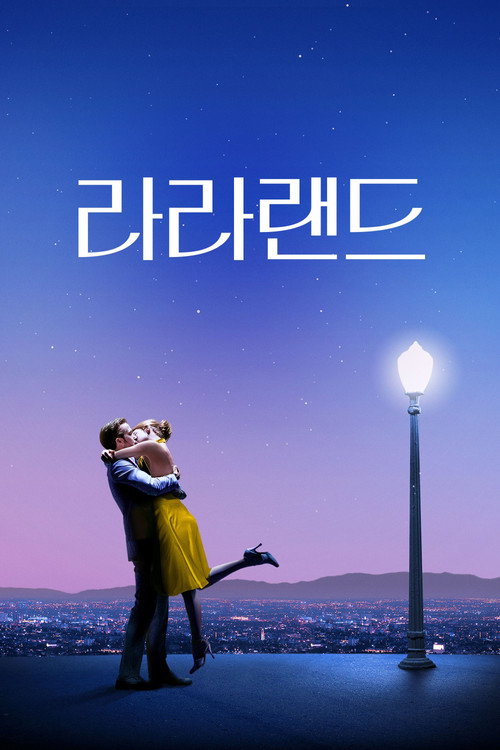
Set against the dazzling backdrop of Los Angeles, La La Land is a musical romance that walks the razor's edge between dreams and reality. Jazz pianist Sebastian and aspiring actress Mia meet among LA's gleaming studios and cafés, but their story refuses to end as a simple love tale. The artist's stubborn devotion to keeping pure jazz alive clashes head-on with an actress's drive for mainstream success, leading to the most beautiful yet heartbreaking moment of choice. This film poses a deep question to every viewer: what price must you pay to chase a dream?

Synopsis

Mia Dolan, dreaming of becoming an actress, works as a barista at a studio café while throwing herself at one audition after another. Jazz pianist Sebastian Wilder fights to keep traditional jazz alive. By chance, the two meet and begin exchanging their dreams and ways of life, forming a deep emotional bond. Sebastian tries to show Mia the meaning of 'real art,' while Mia tries to open Sebastian's eyes to the possibilities of a practical life. Their relationship glows like the gorgeous sunsets of Los Angeles — yet ultimately, they find themselves at a crossroads where each must choose their own path.

Cast6

S

Jazz pianist · Ryan Gosling

A purist who insists on old-school traditional jazz and nothing else. His musical convictions run deep — he has contempt for commercial fusion jazz or anything chasing mass appeal. His life's goal is to open his own jazz bar and keep the art form alive.

M

Aspiring actress and barista · Emma Stone

A young dreamer living in the glittering city, constantly stumbling through auditions and carrying an undercurrent of anxiety about her future. Bold and romantic, yet always running into the hard wall of reality — she embodies the archetypal youth who refuses to stop dreaming.

K

The Messengers band vocalist · John Legend

A jazz musician who once shared the same struggles as Sebastian. Unlike Sebastian, he embraces new sounds and mainstream appeal, and shows a magnanimous spirit by being the first to reach out and mend bridges.

L

Sebastian's older sister · Rosemarie DeWitt

Sebastian's older sister, a warm and somewhat romantic figure who worries about her younger brother's dreams. She appears only in a photograph near the end of the film, glimpsed having settled into a domestic life with her boyfriend Jordan.

G

Mia's boyfriend · Finn Wittrock

Mia's boyfriend before Sebastian. Mild-mannered and kind, he offers comfort and stability — yet Mia ultimately drifts away from him as her heart moves toward a different kind of life.

T

Screenwriter friend · Callie Hernandez

One of Mia's close friends. She plays a practical supporting role in Mia's career, notably by introducing the screenwriter Carlo. She is recognizable for her red dress.

Credits

Screenplay
Damien Chazelle
Music
Justin Hurwitz
Production
Summit Entertainment · Gilbert Films · Impostor Pictures · Marc Platt Productions
Chapter 02

Dig Deeper

Dig Deeper
Characterarrow_outward

Keith

Keith is a figure who represents the commercial success and popular appeal of jazz, forming a stark contrast with Sebastian, who insists on the purity of traditional jazz. Drawing on a history of shared struggle with Sebastian, he proposes reconciliation despite their musical differences — serving as an important 'magnanimous connector' in the film's conflict structure.

Characterarrow_outward

Laura

Laura Wilder is Sebastian's older sister — a symbolic figure who appears not through a direct narrative role but through a photograph in the film's epilogue. Her presence serves as a visual counterpoint to Sebastian and Mia's romantic journey of 'artistic dreams,' presenting the image of a stable and 'normal' life path and deepening the film's thematic consciousness.

Characterarrow_outward

Greg

Greg is Mia Dolan's earlier boyfriend, a symbol of the 'practical man' — stable, gentle, and financially grounded. His existence is the embodiment of the 'safe life' that stands in contrast to the dream and passion-filled artistic world Mia pursues. The stability he represents carries the weight of the sweetest yet most regret-laden choice: the one Mia ultimately has to leave behind to reach her dream.

Characterarrow_outward

Tracy

Tracy is one of Mia Dolan's close friends and a screenwriter, playing the role of a catalyst in the film — providing Mia with practical help on her career path. She is not simply a background friend but an important device that offers Mia the connecting thread of 'opportunity' to move toward her dream.

Quotearrow_outward

Jazz isn't easy listening. I know, that's probably the problem. Jazz isn't something you just sit back and hear. You have to see how fierce the battle is.

This defining quote captures the moment Sebastian Wilder defines the essence of jazz to Mia Dolan. It argues that jazz is not simply background music you sit back and hear, but a living art born from improvisation and fierce combat between musicians. It compresses the fundamental conflict running through the entire film — 'the purity of art' versus 'commercial success' — and becomes the decisive catalyst that throws Mia's dream and Sebastian's conviction into collision.

Readingarrow_outward

The Inevitable Choice Between Dreams and Reality

La La Land is a work that maximizes the aesthetics of loss born from chasing a dream. Jazz pianist Sebastian and aspiring actress Mia are each other's source of inspiration, but their dreams are too pure and vast to accommodate a realistic love or stable relationship. Rather than offering a clear resolution, the film leaves viewers with the question: 'What would have happened if we had chosen this path?' — a profound inquiry into the price one must pay to keep a dream alive.

Readingarrow_outward

The Clash Between Artistic Purity and Commercial Success

The clash between artistic purity and commercial success at La La Land's core is a foundational question posed to every artist who chases a dream. The conflict between Sebastian — who fights to preserve the 'genuine conversation' of traditional jazz — and Mia — who must walk the commercially driven road of an actress — carries a deep reflection on whether art can ever become a product for mass consumption. Through the tragic conclusion that these two values cannot coexist, the film illustrates the price of success: it always comes at the cost of something irreplaceable.

Cardarrow_outward

The Meaning and Setting of La La Land

The name 'La La Land' — both the film's title and its setting — holds a double meaning: it is Los Angeles's nickname and an expression meaning 'a state of being disconnected from reality.' This duality is the core theme running through the entire work, implying that the space of LA, full of dreams and fantasy, is simultaneously a stage of cold reality. The film poses a deep question about the passion and frustration artists experience as they chase their dreams, and about the price those dreams demand.

Cardarrow_outward

Sebastian's Jazz Philosophy

The jazz philosophy Sebastian Wilder embodies defines jazz not as simple background music but as a process of 'fierce combat' and 'intense communication' between musicians. This philosophy is directly linked to a sense of crisis that jazz is 'dying,' and it collides head-on with Mia's practical goal of 'commercial success,' driving the film's core conflict.

Cardarrow_outward

The Conflict Between Keith and Sebastian

The conflict between Sebastian and Keith symbolizes, beyond a simple musical disagreement, the fundamental artistic tension between 'preservation' and 'evolution' that the genre of jazz itself must navigate. Sebastian's insistence on the purity of traditional jazz and Keith's attempt to adapt to popular currents demonstrate the eternal dilemma between commercialism and artistic integrity that every art form faces, adding depth to the film's thematic weight.

Cardarrow_outward

The Rialto Theater Reunion

The reunion at the Rialto Theater is the defining scene that burns into the audience's memory that Mia and Sebastian's connection is not mere coincidence but destiny. When Mia — exhausted by auditions — arrives at the agreed-upon theater and Sebastian finds her in the middle of a screening, it is the emotional flashpoint in which both realize they are 'essential to each other.' The scene symbolizes the destined pull of encountering kindred spirits while chasing dreams, and the wistful resonance created by the intrusion of reality.

Cardarrow_outward

Comparison and Influence: Whiplash

La La Land is celebrated as a 'realist musical' that goes beyond simple musical romance — a film that captures the real and wistful anguish of pursuing a dream. It succeeds in visualizing the inner conflicts and the universal emotion of dream-loss through the fusion of music and imagery rather than through spectacular display, thereby expanding the boundaries of the genre.

Characterarrow_outward

Sebastian Wilder

Sebastian Wilder is an artist with fierce convictions who fights to preserve the purity of traditional jazz. He stands against the commercial success-chasing current of LA and mass culture, arguing that jazz is not mere background music but 'fierce dialogue' and living art. His character simultaneously symbolizes the tenacity an artist must have, and the wistful tragedy of one who must eventually negotiate with reality.

Characterarrow_outward

Mia Dolan

Mia Dolan symbolizes the razor's edge between dream and reality against the glamorous backdrop of Los Angeles. She represents the archetypal youth stumbling against the practical walls of failed auditions and financial anxiety, and throughout the film she longs for external validation. But through her encounter with jazz pianist Sebastian, she discovers a self that is 'the kind of actress who writes her own scripts' — completing a story of growth in which she comes to understand the value of the process of chasing a dream itself.
Things worth knowing5

The Meaning and Setting of La La Land

The film's title 'La La Land' is both a nickname for Los Angeles and an idiom meaning 'a state of being disconnected from reality.' This double meaning threads through the film's entire thematic fabric. The space of LA itself implies a stage where dreams and fantasy abound, yet cold reality exists just beneath the surface.

In the film, LA is depicted as a place where 'shining opportunity' and 'defeat' constantly intersect. Every setting — Mia's audition rooms, Sebastian's jazz bar, the glamorous parties — amplifies the yearning of those who chase dreams. The title's meaning of 'disconnection from reality' comes to symbolize the dilemma artists face: having to sacrifice stable relationships or careers in the real world for the sake of a dream.

Foreshadowingarrow_outward
Sebastian's Jazz Philosophy

Sebastian defines jazz not as 'comfortable background music' but as a 'fierce clash' and 'intense communication.' He sees jazz as a first performance every single night — a process made new each time through the collision and compromise between musicians, and he finds value in that process itself.

He is gripped by a sense of crisis that jazz is dying, and reviving it is his life's purpose. This fierce conviction becomes the central argument he makes to Mia about the meaning of 'true art' — and it collides head-on with Mia's practical goal of 'commercial success.'

Foreshadowingarrow_outward
The Conflict Between Keith and Sebastian

Sebastian and Keith once shared the same road, but parted ways over their musical vision. While Sebastian fights to preserve the purity of old-school jazz, Keith pursues a sound infused with electronic elements and pop melodies for a broader audience.

Their relationship symbolizes the generational and commercial shifts that jazz as a genre has been forced to navigate. Sebastian wants to guard its past glory; Keith wants to adapt to the present current. This conflict is not merely personal — it depicts the eternal tension between 'preservation' and 'evolution' that every art form must face.

Key Scenearrow_outward
The Rialto Theater Reunion

The Rialto Theater, where Mia has promised to meet Sebastian. Exhausted from a failed audition, Mia finds that this single appointment rekindles her excitement and hope. The moment she spots Sebastian inside and they find each other symbolizes the emotional crescendo between the two.

This scene is the decisive moment in which both realize they are 'essential to each other' in the midst of chasing their respective dreams. The explosion of private feeling in a public space burns into the audience the certainty of their connection: this is not mere coincidence — it is destiny.

Behind the Scenesarrow_outward
Comparison and Influence: Whiplash

Critics praised the film as closer to a realist musical reminiscent of New York, New York than to Whiplash. This is interpreted as meaning it succeeded in a modern reimagining of the musical genre.

It demonstrates the depth of director Damien Chazelle's roots in the musical genre. His approach of using the fusion of music and image to visualize the inner conflict of characters is cited as one of his distinct directorial strengths, shown here in full bloom.

Memorable lines1

Jazz isn't easy listening. I know, that's probably the problem. Jazz isn't something you just sit back and hear. You have to see how fierce the battle is.

Sebastian Wilder · The scene where Sebastian passionately explains the essence of jazz to Mia, emphasizing that jazz is far more than background music.
Chapter 03

Aftermath

Aftermath

Legacy

La La Land is credited with spearheading the revival of the musical romance genre in the latter half of the 2010s. Its directorial approach of fusing music and visual beauty to maximize the psychological transformation of characters has gone on to influence many subsequent musical and romantic films. In addition, the film's OST — including 'City of Stars' — achieved massive global popularity, greatly elevating the film's musical legacy.

Trivia3