Comparison and Influence: Whiplash
La La Land is celebrated as a 'realist musical' that goes beyond simple musical romance — a film that captures the real and wistful anguish of pursuing a dream. It succeeds in visualizing the inner conflicts and the universal emotion of dream-loss through the fusion of music and imagery rather than through spectacular display, thereby expanding the boundaries of the genre.
Genre Redefined: A Realist Musical Beyond Spectacle
One of the greatest praises La La Land received from critics is that the film refused to remain within the category of a musical built purely on spectacular visuals. Critics evaluated the work as closer to a 'realist musical' in which the intoxication of dreams and the poignancy of reality coexist — like New York, New York — than to a work like Whiplash that explores intense artistic pressure. This speaks to the success of director Damien Chazelle's modern reimagining of the musical genre.
La La Land's musical sequences do not function merely as glamorous stage performances. Instead, they are used as tools to visualize the emotional states and inner conflicts of the characters. For instance, the scenes of Sebastian and Mia dancing, or the dance that erupts amid a traffic jam at the film's opening, go beyond romantic staging to symbolize the 'frozen time' and 'trapped emotions' of their circumstances. This makes the audience feel not the success or failure of a dream, but the pain and beauty of the process of dreaming itself.
The Fusion of Music and Imagery: Visualizing Inner Conflict
Director Chazelle's directorial strength lies precisely in the approach of using the 'fusion of music and imagery' to maximize the psychology of characters. In this film, music goes beyond background music (BGM) — it is the very stream of a character's consciousness.
- The Language of Jazz: The pure jazz Sebastian pursues is described as the music of 'conversation.' This means that jazz is not simply something to listen to, but an art that gains vitality through improvised 'communication' and 'collision' between musicians. This concept collides with Mia's dismissal of jazz as 'background music,' forming the film's core philosophical conflict.
- The Flow of Time: The film's temporal setting, interwoven with the spatial backdrop of LA, underscores the themes of 'opportunity' and 'the finite nature of time.' The image of Mia throwing herself at auditions only to fail repeatedly, and Sebastian fighting to keep jazz alive, visually conveys the time pressure felt by everyone who chases a dream.
The Question of the Price of 'Success'
La La Land's deepest theme is a question about the definition of 'success.' The film poses this question through the reunion after success has been achieved. Mia becomes a successful actress; Sebastian opens his own jazz club and fulfills his dream. Both have achieved their goals — but in the process, they cannot recover the 'pure emotion' they shared or 'the time they could have spent together.' This ending invites the audience to reflect deeply on whether 'success' as a goal can justify everything, and what must be given up in the process of chasing a dream. This carries the philosophical weight of 'the price of choice,' far beyond a simple parting.
Why It Matters
The stylistic depth of La La Land is the core driving force that prevents the film from being consumed as a simple romantic comedy and pulls it up into the realm of art film. Had the director focused solely on a 'love story,' the film would have remained light and volatile. But by using music and visual direction to make 'the dream' — abstract and anguishing — into something concrete as 'conflict,' the film's realist approach means audiences receive Mia and Sebastian's parting not as the simple breakup of a couple, but as the inevitable collision of two different ways of life and dreams. This structural depth is why La La Land receives timeless artistic acclaim.
Other 비화 dives4
- arrow_outward
The Meaning and Setting of La La Land
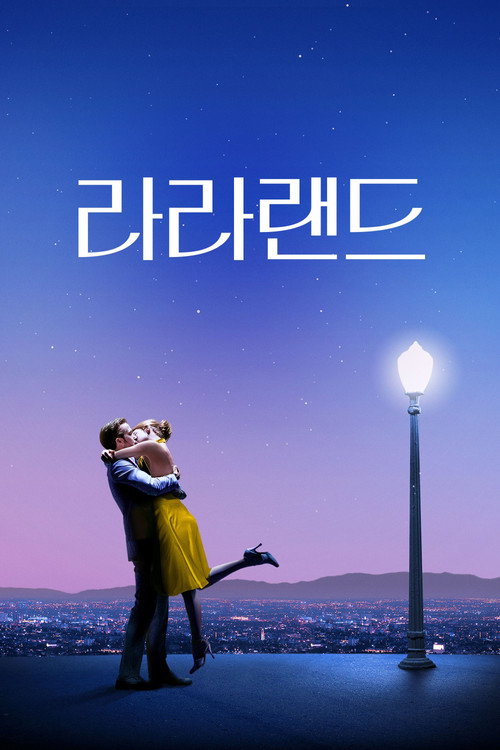
The name 'La La Land' — both the film's title and its setting — holds a double meaning: it is Los Angeles's nickname and an expression meaning 'a state of being disconnected from reality.' This duality is the core theme running through the entire work, implying that the space of LA, full of dreams and fantasy, is simultaneously a stage of cold reality. The film poses a deep question about the passion and frustration artists experience as they chase their dreams, and about the price those dreams demand.
- arrow_outward
Sebastian's Jazz Philosophy
The jazz philosophy Sebastian Wilder embodies defines jazz not as simple background music but as a process of 'fierce combat' and 'intense communication' between musicians. This philosophy is directly linked to a sense of crisis that jazz is 'dying,' and it collides head-on with Mia's practical goal of 'commercial success,' driving the film's core conflict.
- arrow_outward
The Conflict Between Keith and Sebastian
The conflict between Sebastian and Keith symbolizes, beyond a simple musical disagreement, the fundamental artistic tension between 'preservation' and 'evolution' that the genre of jazz itself must navigate. Sebastian's insistence on the purity of traditional jazz and Keith's attempt to adapt to popular currents demonstrate the eternal dilemma between commercialism and artistic integrity that every art form faces, adding depth to the film's thematic weight.
Back to the title
La La Land
14 deep dives in total