arrow_back
Arrival
Arrival
Film

Arrival

Arrival

Directed by Denis Villeneuve · 2016-11-10 · 116 min · FilmNation Entertainment

Contact with an alien civilization triggers a crisis that puts humanity's survival at stake. As linguist Louise Banks works to decipher the aliens' language, she confronts a shocking truth: humanity's very concept of time may be fundamentally flawed. Understanding 'non-linear time'—where past, present, and future coexist simultaneously—becomes the key that will decide the fate of the human race. This film transcends the simple SF thriller to ask a profound philosophical question: how do we define 'time' and 'communication' itself?

Synopsis

Twelve alien vessels (shells) appear in the skies above locations around the world, plunging humanity into chaos. Linguist Louise Banks is dispatched alongside physicist Ian Donnelly to make contact with the aliens—known as Heptapods. Inside the shell, they communicate with the creatures, teaching human language and script while collecting a diplomatic vocabulary. Through this process Louise realizes that the aliens' mode of thought does not follow the linear flow of time. But when the aliens' message is mistranslated as 'offer weapon,' global conflict erupts, and Louise is forced to a momentous crossroads involving humanity's survival and the very nature of time.

Cast5

L

Linguist (specialist in alien language decoding) · Amy Adams

The central figure who, through contact with the aliens, comes to perceive time in a mode where past, present, and future exist simultaneously. Her personal tragedy becomes the very catalyst that makes genuine communication with the Heptapods possible.

I

Theoretical physicist · Jeremy Renner

Tasked with analysing the relationship between time and language from a physics perspective through contact with alien civilisation. He poses academic questions to Louise about the Heptapods' language and mode of thought.

C

US Army officer · Forest Whitaker

The military authority who leads the contact effort. Initially displays wariness and anxiety toward the aliens, pressing for concrete action to ensure human survival.

A

Government agent · Michael Stuhlbarg

One of the figures representing the government's response and the military dimension of the alien contact. Contributes to shaping hostile public opinion amid global anxiety.

G

General, People's Liberation Army of China · Tzi Ma

A figure symbolising each nation's response to the alien visitors. Amplifies misunderstanding and conflict in the communication process, and is involved in decisions that breed mistrust between nations.

Credits

Screenplay
Eric Heisserer
Music
Jóhann Jóhannsson
Production
FilmNation Entertainment · Lava Bear Films · 21 Laps Entertainment
Chapter 02

Dig Deeper

Dig Deeper
Characterarrow_outward

General Shang

General Shang is a figure symbolising national anxiety and distrust in the process of contact with alien civilisation. The decisions of the PLA he commands — based on the mistranslated message that the aliens are 'offering weapons' — become the decisive trigger for exploding global conflict and cutting communications between twelve nations. He dramatically shows the danger of the collective fear and nationalistic response humanity experiences before an unknown entity.

Quotearrow_outward

Language is the foundation of civilization. It is the glue that holds a people together. It is the first weapon drawn in a conflict.

Ian Donnelly's iconic line — 'Language is the foundation of civilization. It is the glue that holds a people together. It is the first weapon drawn in a conflict.' — represents an anthropocentric, linear view of language. Far beyond a mere academic assertion, it forms the philosophical backbone of the entire film and serves as the central device that raises the fundamental question of how limited and erroneous human concepts of language and time can be when confronted with alien civilisation.

Readingarrow_outward

The non-linearity of time and the meaning of existence

The non-linearity of time — the core theme of Arrival — is a philosophical concept that shatters the limitation of humans perceiving time as a linear flow of past-present-future. As Louise Banks acquires the Heptapod language and embraces the non-linear view in which every moment exists simultaneously, this comes to symbolise, beyond mere scientific knowledge, an ontological liberation: 'every moment of life is connected and concepts like regret or longing simply do not exist.'

Readingarrow_outward

The dialectic of fatalism and free will

The dialectic of fatalism and free will — Arrival's core philosophical axis — poses the question of whether knowing the future paralyses human will. Louise Banks perceives a painful future (her daughter's death) but this knowledge does not render her powerless. Rather, it argues the paradox that on this fateful backdrop the active 'choice' to fully experience 'the present moment' is possible, showing that the human will to choose supersedes fatalistic destiny.

Cardarrow_outward

Fatalism and the choice of free will

The fatalism vs. free will debate — Arrival's core philosophical axis — unfolds through the experience of Louise Banks, who comes to perceive the non-linear flow of time through learning an alien language. This theme simultaneously presents the deterministic worldview (Laplace's demon) that everything in humans is determined under the laws of physics, while emphasising the active human will that 'chooses' the most valuable moments even knowing the future — posing a fundamental question to the audience.

Readingarrow_outward

The interaction between language and thought

The core theme of Arrival — 'the interaction between language and modes of thought' — is depicted as a process that goes beyond mere communication to redesign the very cognitive architecture of the human mind. The protagonist Louise Banks' journey of acquiring an alien language symbolises an intellectual transformation: evolving from a human mode of thought trapped in linear time to a non-linear cognition in which past, present, and future coexist.

Cardarrow_outward

Non-linear time and the structure of the shell

The non-linear concept of time — the core philosophical pillar of Arrival — originates in the mode of thought and language structure of alien civilisation 'Heptapod.' Their temporal view, in which past, present, and future coexist simultaneously, shatters the limits of the linear time humans experience and poses to the audience a fundamental question about the nature of 'time' and 'communication.'

Cardarrow_outward

Linguistic and physical background knowledge

The 'relationship between language and time' — the core philosophical device of Arrival — goes beyond mere communication with alien life forms to pose the fundamental question that human modes of thought are themselves trapped in the linear flow of time. The process of decoding the alien language's non-linear structure becomes the decisive opportunity for protagonist Louise Banks to experience a 'simultaneous consciousness' that transcends the constraints of time.

Cardarrow_outward

The first attempt at communication and the discovery of names

This scene goes beyond simple language learning — it is the decisive symbolic moment in which humans and alien civilisation mutually recognise each other's existence at the level of 'individual.' The process in which Louise writes her name 'LOUISE' and the aliens respond by showing an altered character, then each alien is given an individual name, constitutes a key turning point elevating communication from the 'species' level to the 'individual' level.

Cardarrow_outward

Differences between the source novel and the film

The greatest difference between Arrival the film and its source novel lies in the interpretation of 'fatalism' and 'free will.' Whereas the novel portrays the characters as performing a 'play' of submitting to fate — because knowing the future is a paradox — the film emphasises Louise's personal 'choice,' maximising the value of the human will to choose and adding narrative depth.

Characterarrow_outward

Louise Banks

Louise Banks is far more than a simple linguist — she is the figure who confronts the shocking truth, through contact with alien civilisation, that humanity's very concept of time may be an error. Her journey is the process of exploring the relationship between language and modes of thought, ultimately posing a philosophical question about humanity's destiny by understanding the non-linear concept of time in which past, present, and future coexist simultaneously.

Characterarrow_outward

Ian Donnelly

Ian Donnelly is not a simple scientist but a theoretical physicist responsible for the film's philosophical depth. Through contact with alien civilisation, he poses a fundamental question about the concept of 'the linearity of time' itself — long taken for granted by humanity. Adding a physical perspective to Louise's linguistic interpretation, he builds the core setting that the aliens' mode of thought follows the non-linear concept of time in which past, present, and future coexist simultaneously.

Characterarrow_outward

Colonel Weber

Colonel Weber is a figure who symbolises the collision point between military tension and scientific inquiry in the process of contact with alien civilisation. Initially leading the assessment of immediate threat and wariness toward the alien life forms, through cooperation with Louise Banks he comes to realise that 'communication' must take precedence over 'force' for the survival of the human race.

Characterarrow_outward

Agent Halpern

Agent Halpern, in the unprecedented crisis of contact with alien civilisation, is a figure who represents the anxiety and hostile public opinion of the government and the populace. Contrasting with Louise Banks' pursuit of scientific understanding and a linguistic approach, he plays the symbolic role of showing how humanity fears and misunderstands an unknown entity.
Things worth knowing5

Non-linear time and the structure of the shell

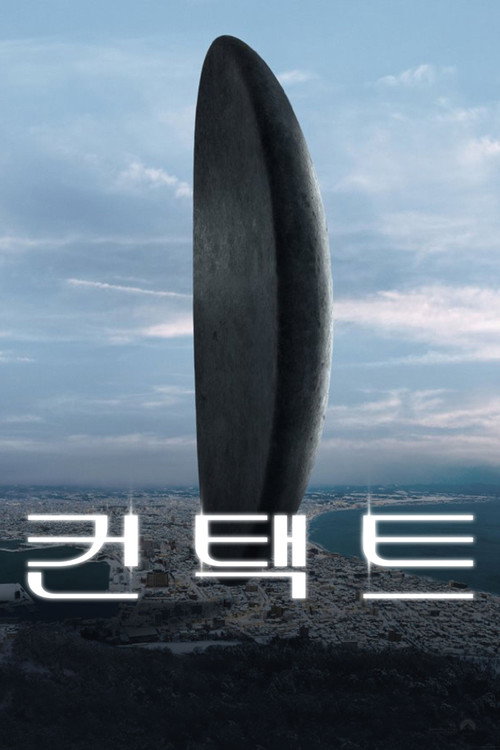
The Heptapods have no sense of tense—they understand the universe through a 'Hamiltonian' mode in which past, present, and future all exist simultaneously. Their language is expressed not in linear script bound by temporal sequence, but in circular logograms. The twelve alien vessels (shells) appear above key locations around the world; the door at the bottom opens every 18 hours.

The aliens think in a way that considers all possible paths simultaneously, so they have no concept of tense. This stands in fundamental contrast to the linear flow of time (past→present→future) that humans experience. The circular script reflects the mode of thought of a being unconstrained by time—from both a linguistic and a physical perspective.

Foreshadowingarrow_outward
Linguistic and physical background knowledge

The alien language logograms originate from the word 'Heptapod,' combining the Greek words for 'seven' (hepta) and 'foot' (pod). These logograms began from fifteen sketch ideas provided by the art director's wife, divided into twelve equal parts from a central point, and eventually expanded into a dictionary of one hundred symbols. The code for the alien language conversion scenes was written with the participation of Stephen Wolfram and his son Christopher Wolfram.

The film draws on extensive research across linguistics and the physical principle of stationary action, among other fields. The aliens' language structure follows no conventional grammar or word order—a premise that contrasts with the assumption that human language and thought are constrained by time. In the process, the philosophical question 'is knowing the future a contradiction?' is raised.

Key Scenearrow_outward
The first attempt at communication and the discovery of names

Louise removes her protective gear and approaches the transparent barrier to communicate with the aliens. She holds up a whiteboard with her name 'LOUISE' written on it; the aliens respond by displaying an altered character. When Ian also removes his suit and writes 'IAN,' the aliens show each of their names in alien script—marking the first personal communication.

This scene is a symbolic moment in which humans and aliens acknowledge each other as 'individuals' rather than simply as species. Ian gives the aliens the names 'Abbott' and 'Costello,' playing a key role in transmitting the human linguistic system to the aliens.

Fatalism and the choice of free will

Through contact with the aliens, Louise gains the ability to see the future—an ability connected to the daughter who appears in her memories. Although she knows what lies ahead, the film portrays her as 'choosing' that future through free will in order to experience the precious time she will share with her daughter. This emphasises the human capacity to choose even when the outcome is known.

This narrative device poses a fundamental question to the audience: 'Does knowing the future truly deprive us of free will?' Louise's actions are interpreted not as submission to fate, but as an active, wilful act of choosing the most valuable moments within that fate.

Behind the Scenesarrow_outward
Differences between the source novel and the film

In the source novel, the aliens' reason for visiting Earth is simply that they were 'destined to visit'—and rather than trying to change a perceived future, they focus on making it real as experienced. The film differs by preserving a margin of 'choice' through Louise's personal decisions (divorce, her daughter's death), strengthening the dramatic narrative.

In the novel, knowing the future would become a contradiction if revealed, so the characters have no need to disclose it. The film, by contrast, portrays Louise as though she is making choices even while knowing the future—maximising the value of the human will to choose.

Memorable lines1

Language is the foundation of civilization. It is the glue that holds a people together. It is the first weapon drawn in a conflict.

Ian Donnelly · Narrated by Ian as Louise struggles to communicate with the aliens, emphasising the primacy of language.
Chapter 03

Aftermath

Aftermath

Legacy

Arrival opened a new horizon for the intellectual, philosophical SF epic by deeply combining the academic backgrounds of 'linguistics' and 'physics' within the SF genre, transcending the simple alien-invasion thriller. In particular, its narrative structure—reinterpreting the concept of time as circular and connecting the protagonist's personal tragedy to the grand fate of humanity—has influenced many subsequent SF films and literary works. It is regarded as a textbook example of how to handle the 'flow of time' visually and conceptually.

Trivia3