Cardarrow_outward
The Fish Transformation at the River’s Edge
In the film’s climax, the scene where Ed Bloom compares his death to ‘becoming a great fish swimming down a river’ goes beyond a simple ending — it symbolically shows that his life was not a fixed set of facts but an endlessly flowing ‘narrative.’ This scene visualizes the moment the father completes his life as one grand story and passes it on to his son, at the very moment Will tries to bring ‘truth’ to bear.
Cardarrow_outward
Tim Burton’s Uncharacteristically Warm Tone
Big Fish is characterized by a warm, dreamlike tone that departs from Tim Burton’s typical dark and macabre aesthetic, delivering emotional resonance to its audience. This tonal shift goes beyond a simple stylistic choice — it means that the method of dealing with ‘truth’ is expressed through the warm embrace of ‘storytelling’ rather than darkness or the grotesque, directly tied to the work’s core thematic consciousness.
Characterarrow_outward
Ed Bloom (young)
Ed Bloom (young) is a storyteller who has lived his whole life for adventure, with an extraordinary gift for wrapping his experiences in tall tales. Rather than simply recalling the past, he makes his very existence into one grand narrative. His legendary life poses for son Will the fundamental question of the boundary between ‘truth’ and ‘story,’ driving the film’s core themes.
Characterarrow_outward
Ed Bloom (senior)
Ed Bloom (senior) is a dying father and a storyteller seeking to complete his life as one grand narrative. He tells his son extraordinary tales beginning with ‘Back in my day...’ — stories that are not mere lies but the most beautiful way of defining one person’s existence and love. His stories dissolve the boundary between truth and fiction and serve as the core device for exploring the meaning of life.
Characterarrow_outward
Will Bloom
Will Bloom initially dismisses his father Edward Bloom’s extraordinary adventure tales as mere boasting and sets out to uncover the truth. But as his father’s death approaches and he meets old friends from the past, he comes to realize his father’s stories were not lies but ‘stories’ — the most beautiful packaging of every moment and act of love in the life his father lived. Will’s journey poses the profound question of which holds more value: ‘truth’ or ‘story.’
Characterarrow_outward
Sandra Bloom (mother)
Sandra Bloom is the central anchor of the family sustaining Ed Bloom’s life, and the most pivotal figure navigating the boundary between fantasy and reality. As the listener to her husband’s extraordinary adventure tales, she dismantles the criteria for ‘truth’ that son Will pursues and ultimately serves as the emotional anchor that assigns value to ‘story’ itself.
Characterarrow_outward
Jenny
Jenny is one of the most mysterious and enchanting figures woven into Ed Bloom’s adventure tales. Her characterization as a witch who can read destiny symbolizes the film’s core theme — that Ed Bloom’s life should exist as ‘story’ rather than ‘truth.’ Her presence is the most beautiful piece of beautiful fiction that prevents the son from accepting the father’s life as objective fact.
Quotearrow_outward
Sometimes the fantastic lie is better than the shameful truth — especially when it comes from love!
「Sometimes the fantastic lie is better than the shameful truth — especially when it comes from love!」 This iconic line pierces the core philosophy of Big Fish. It explains why the father refuses to confine his life to the narrow frame of ‘truth’ and instead reconstructs it as an infinite fantasy called ‘story.’ This is not mere boasting — it is the most beautiful way of completing the very existence of someone you love.
Readingarrow_outward
The Role of the Storyteller and the Meaning of Existence
The central theme of Big Fish is an exploration of the ‘storyteller’s’ role and how narrative completes the meaning of human existence. Ed Bloom reconstructs his life not as a bare recitation of facts but as a grand story full of adventure and fantasy. The film warmly depicts how, in the face of death — the ultimate truth — the most beautiful fictional narrative sustains the value of a life and becomes the legacy passed on to a son.
Readingarrow_outward
Narrative as the Medium of Memory and Love
The central theme of Big Fish is exploring the essence of human love and memory at the point where the line between ‘objective truth’ and ‘subjective narrative’ dissolves. The film argues that the father’s extraordinary adventure tales are not mere boasting but the most beautiful form of ‘narrative’ — one through which the father completes his life and love, and passes it on to his son.
Characterarrow_outward
Alison Lohman
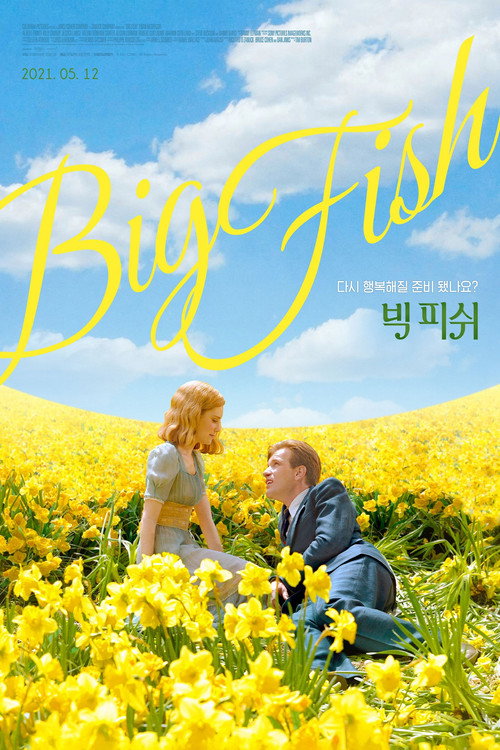
Alison Lohman appears in the past romance between Ed Bloom and Sandra as told in the father’s tales. More than a supporting character, she is the symbol of an ‘idealized past’ essential to Ed Bloom’s completion of his life as one grand narrative. Her presence embodies the most beautiful, flawless moment of love the father wishes to remember.
Cardarrow_outward
The Ghost Town of Specter and the Witch
The ghost town of Specter and the witch Jenny are not mere fantastical backdrops — they are narrative devices through which Ed Bloom reconstructs his life as a ‘story.’ These spaces transcend the logic of reality, posing for the audience and son Will the fundamental questions of what ‘truth’ is, and whether what sustains a human life is objective fact or the power of beautiful fiction.
Cardarrow_outward
The Blurry Line Between Lie and Truth
The core theme of Big Fish explores the boundary between ‘truth’ and ‘story’ at the point where they dissolve. Though a son dismisses his father’s tales as boasting and tries to uncover the truth, the film ultimately shows that truth is not a bare recitation of objective facts but ‘story’ itself — reconstructed through love and memory. This process is the most beautiful way of completing the meaning of one person’s existence.